Top Car Trends 2024: Insights by Carly Gregg
The automotive industry continues to evolve at a breakneck pace, and 2024 has emerged as a pivotal year for innovation, sustainability, and consumer preferences. From electrification breakthroughs to autonomous driving advancements, the landscape of personal transportation is undergoing a fundamental transformation. Carly Gregg, a respected automotive analyst and contributor to the DrivePulse Daily Blog, has identified the most significant trends shaping the industry this year.
Whether you’re a seasoned enthusiast or a casual driver looking to understand what’s coming next, understanding these trends helps you make informed decisions about your next vehicle purchase. This comprehensive guide explores the emerging patterns, technological innovations, and market shifts that define 2024’s automotive landscape.
Electric Vehicle Market Maturation
The electric vehicle revolution has transitioned from novelty to mainstream reality in 2024. According to Carly Gregg’s analysis, EV adoption is no longer concentrated among early adopters and tech enthusiasts. Mainstream consumers are increasingly choosing electric powertrains, driven by improved battery technology, expanded charging infrastructure, and competitive pricing across multiple segments.
The advantages of electric vehicles have become increasingly apparent to everyday drivers. Battery ranges now routinely exceed 300 miles on a single charge, addressing one of the primary concerns that previously deterred adoption. Major manufacturers are releasing compelling EV options at price points that compete directly with traditional internal combustion vehicles.
Charging infrastructure expansion remains critical to this trend’s continuation. Public charging networks are becoming denser in urban and suburban areas, while home charging installation becomes more accessible and affordable. The shift toward faster DC charging technology means drivers can add meaningful range in under 30 minutes, fundamentally changing the ownership experience.
Key metrics from 2024 EV market data:
- EV sales represent approximately 18-20% of new vehicle purchases in major markets
- Average EV battery capacity has increased by 15-20% compared to 2023 models
- Charging time for 80% battery capacity has decreased to under 25 minutes for premium models
- Used EV prices have stabilized after volatility in previous years
Gregg emphasizes that battery technology improvements extend beyond just capacity. Thermal management systems, fast-charging capabilities, and longevity have all advanced significantly. Many manufacturers now offer 10-year battery warranties, providing consumer confidence that was previously lacking.

Autonomous Driving Technology Evolution
Self-driving technology has progressed from science fiction to measurable reality throughout 2024. However, Carly Gregg notes that the narrative has shifted from fully autonomous vehicles arriving imminently to a more nuanced understanding of advanced driver assistance systems (ADAS) and their gradual evolution toward higher levels of autonomy.
Level 2 and Level 3 autonomous features are now standard or available on hundreds of vehicle models. These systems handle specific driving tasks under defined conditions, providing real-world safety benefits while gathering crucial data for future development. Tesla’s Full Self-Driving Beta continues iterating, while traditional manufacturers like BMW, Mercedes-Benz, and General Motors deploy increasingly sophisticated systems.
The regulatory environment has become more structured, with standardized testing protocols and safety requirements emerging across jurisdictions. This regulatory clarity has actually accelerated development, as manufacturers understand what they must demonstrate to earn consumer trust and regulatory approval.
Current ADAS capabilities include:
- Adaptive cruise control with traffic-aware functionality
- Automated lane-keeping and lane-changing assistance
- Parking automation, including perpendicular and parallel parking
- Predictive collision avoidance and emergency braking
- Highway driving automation under specific conditions
Software-Defined Vehicles and OTA Updates
Perhaps the most transformative trend Gregg identifies is the shift toward software-defined vehicles. Modern cars are increasingly defined by their software capabilities rather than their mechanical specifications alone. This fundamental change parallels the smartphone revolution, where over-the-air (OTA) updates continuously enhance vehicle functionality.
Manufacturers are now releasing vehicles that improve over time through software updates, adding features and improving performance without requiring service appointments. This approach fundamentally changes the ownership experience and extends the relevance of vehicles throughout their lifecycle.
The implications are significant. A vehicle purchased in 2024 may have substantially different capabilities in 2026 compared to its original configuration. This creates opportunities for manufacturers to generate revenue through software subscriptions and feature unlocks, similar to smartphone ecosystems.
Software-defined vehicle benefits:
- Continuous performance optimization through data-driven updates
- New feature deployment without physical modifications
- Improved safety through regular security patches
- Personalized driving experiences tailored to individual preferences
- Reduced service center visits for software-related issues
Luxury EV Competition Intensifies
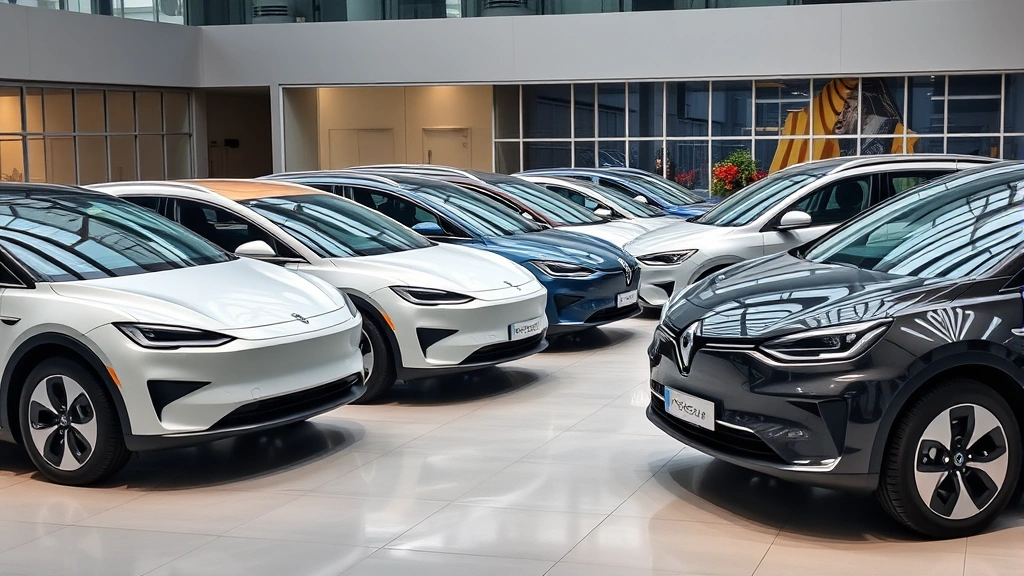
The luxury automotive segment is experiencing unprecedented disruption as electric vehicles challenge traditional powerhouse brands. Tesla’s dominance in the premium EV segment is being tested by established luxury manufacturers and emerging EV specialists.
Porsche’s Taycan, BMW’s i-Series, Mercedes-Benz’s EQS, and Audi’s e-tron lineup have matured into compelling alternatives. Meanwhile, emerging Chinese brands like NIO, XPeng, and BYD are pushing technological boundaries and offering feature-rich experiences at competitive prices, challenging traditional Western market assumptions.
Carly Gregg points out that this competition benefits consumers tremendously. Luxury EV buyers now have genuine choices, with differentiation based on performance characteristics, design philosophy, charging ecosystems, and technological innovation rather than brand heritage alone.
The specifications of 2024 luxury EVs demonstrate impressive convergence:
- 0-60 mph acceleration: 3.5-5.5 seconds across premium models
- Range: 300-500 miles depending on model and configuration
- Charging capacity: 150-350 kW for premium offerings
- Battery sizes: 75-120 kWh becoming standard
- Interior technology: 15-17 inch touchscreens with advanced AI integration
Sustainability Beyond Batteries
While electrification captures headlines, Gregg emphasizes that 2024’s sustainability trends extend far beyond battery technology. Manufacturers are increasingly focusing on lifecycle environmental impact, from raw material sourcing through vehicle recycling.
Supply chain transparency has become a competitive differentiator. Consumers are increasingly aware that EV environmental benefits depend partly on how responsibly manufacturers source lithium, cobalt, and other critical minerals. Leading manufacturers are implementing blockchain tracking and investing in recycling infrastructure to create closed-loop material cycles.
Interior material innovation represents another significant trend. Sustainable alternatives to traditional leather and plastics are becoming standard in premium vehicles. Lab-grown leather, recycled ocean plastics, and plant-based materials are appearing in 2024 model lineups from mainstream manufacturers.
Additionally, manufacturing process improvements continue reducing per-vehicle emissions. Water usage optimization, renewable energy integration in production facilities, and waste reduction initiatives mean that even the manufacturing phase of modern vehicles is becoming cleaner.
Used EV Market Growth
The maturing EV market has created a rapidly expanding used vehicle segment. Carly Gregg identifies the used EV market as particularly significant for 2024, as early EV adopters begin trading in their vehicles, creating opportunities for price-conscious consumers to access electric powertrains.
This trend is closely connected to car maintenance tips for beginners, as used EV owners should understand battery health assessment and long-term reliability considerations. Fortunately, early data suggests that EV powertrains are remarkably durable, with minimal degradation over typical vehicle lifespans.
Used EV pricing has stabilized after experiencing significant volatility in 2022-2023. This stabilization makes used EVs increasingly attractive to budget-conscious buyers who want electric powertrains without premium pricing. CPO (Certified Pre-Owned) EV programs from manufacturers provide confidence through warranty coverage and battery health guarantees.
Used EV market indicators for 2024:
- Used EV transaction volumes up 35-40% year-over-year
- Price depreciation stabilizing at 50-55% of original MSRP after 5 years
- Battery degradation averaging 2-3% annually in real-world use
- Insurance costs for used EVs approaching parity with comparable gas vehicles
Connected Car Ecosystems
Modern vehicles are becoming nodes in comprehensive digital ecosystems, with connectivity extending far beyond basic infotainment. Gregg emphasizes that 2024 represents a maturation phase for connected car technology, with standardization enabling better integration between vehicles and external systems.
Vehicle-to-infrastructure (V2I) communication is expanding, particularly in urban environments. Traffic light information, road hazard alerts, and parking availability data are increasingly being shared with connected vehicles, improving safety and efficiency. Vehicle-to-vehicle (V2V) communication, while less mature, is advancing in pilot programs across multiple regions.
Insurance telematics are becoming more sophisticated, with some insurers offering usage-based pricing that rewards safe driving patterns. Understanding car insurance coverage options becomes increasingly important as drivers consider how connected vehicle data affects their insurance premiums.
The integration of smartphones with vehicle systems has become seamless, with Apple CarPlay and Android Auto evolving to provide deeper integration. Voice assistant technology has advanced significantly, with natural language processing enabling more intuitive vehicle control.
Connected car capabilities in 2024:
- Real-time traffic integration with automatic route optimization
- Predictive maintenance alerts based on vehicle diagnostics
- Remote vehicle control through mobile applications
- Climate pre-conditioning before arrival
- Integration with smart home systems for garage automation
- Seamless navigation between multiple driver profiles
FAQ
What is the most significant automotive trend in 2024 according to Carly Gregg?
Carly Gregg identifies electric vehicle market maturation as the most transformative trend, noting that EVs have transitioned from niche products to mainstream options competing directly with traditional vehicles. The convergence of improved battery technology, expanded charging infrastructure, and competitive pricing has fundamentally shifted market dynamics in 2024.
Are used electric vehicles reliable in 2024?
Yes, reliability data for used EVs is increasingly positive. Early adopter vehicles from 2018-2020 are demonstrating exceptional longevity, with battery degradation averaging just 2-3% annually. Manufacturer-backed CPO programs and extended battery warranties provide additional confidence for used EV buyers.
How does OTA (over-the-air) update technology work in modern vehicles?
Over-the-air updates allow manufacturers to push software improvements directly to vehicles via cellular connectivity, similar to smartphone updates. These updates can enhance performance, add new features, improve safety systems, and address security vulnerabilities without requiring dealership visits. Most 2024 vehicles with advanced infotainment systems support this capability.
What is Level 3 autonomous driving, and is it available in 2024 models?
Level 3 autonomous driving means the vehicle can handle most driving tasks under specific conditions, but human drivers must remain ready to take control if needed. Some 2024 models from manufacturers like BMW and Mercedes-Benz offer Level 3 capabilities in limited geographic areas and under defined conditions, though availability varies by region and regulatory approval.
How much does charging infrastructure cost affect EV adoption?
Charging infrastructure is crucial to EV adoption, but costs and availability have improved dramatically in 2024. Public charging networks are expanding rapidly, home charging installation costs have decreased, and charging speeds have improved significantly. However, rural areas still lag in infrastructure development, which can impact EV viability for some consumers.
What should I know about battery health when considering a used EV?
Battery health is the primary concern when purchasing used EVs, but degradation rates are manageable. Request battery health reports from sellers, check warranty coverage (most EVs have 8-10 year battery warranties), and understand that 2-3% annual degradation is normal. A five-year-old EV battery typically retains 85-90% of original capacity.
Are luxury EVs worth the premium pricing in 2024?
Luxury EV pricing has become more competitive as traditional luxury manufacturers enter the market. Whether premium pricing is justified depends on individual priorities—superior performance, advanced technology, interior refinement, and brand prestige command premiums. However, Chinese EV manufacturers are offering comparable technology at lower prices, providing consumers with genuine alternatives.
How does the DrivePulse Daily Blog cover automotive trends?
The DrivePulse Daily Blog provides comprehensive coverage of emerging automotive trends, consumer guides, and technical information. Topics range from practical advice like how to replace car brake pads to broader industry analysis, making it valuable for both enthusiasts and everyday drivers.