
Table of Contents
Introduction
Here’s something every car owner should know: checking your engine oil is probably the easiest way to keep your car happy. Seriously. You don’t need to be a mechanic or have fancy tools—just a few minutes and a willingness to get your hands slightly dirty. Think of it as taking your car’s pulse. And honestly? Once you get the hang of it, you’ll wonder why you ever felt intimidated by that little metal stick under your hood.
Your engine oil is basically your car’s lifeblood. It keeps all those metal parts from grinding against each other, prevents your engine from turning into an expensive paperweight, and helps everything run smoothly. Here’s the thing though—without enough oil (or with oil that’s gone bad), your engine is heading for trouble. Big, expensive trouble. Most mechanics will tell you to check your oil at least once a month, and definitely before any long road trips. But here’s what they don’t always mention: most people are doing it wrong. Simple mistakes like not parking on level ground or checking when the engine’s still hot can throw off your reading completely. Want to know check car oil level accurately? You’re in the right place.
Now, every car is a little different. Your dipstick might look nothing like your neighbor’s, and your oil requirements could be totally different too. That’s where your owner’s manual becomes your best friend—it’ll tell you exactly where to find your dipstick, what those little marks mean, and what type of oil your engine actually wants. But there’s another part of this that’s just as important: learning to “read” your oil. Fresh oil? It’s usually a nice amber color and feels smooth between your fingers. Old, nasty oil? Think dark chocolate milk, but grittier. If you’re wondering about timing and frequency, the folks at car maintenance tips for beginners have some solid advice that goes beyond just the basics.
Speaking of taking care of your investment—because let’s face it, your car probably cost you a decent chunk of change—it’s worth thinking about protection beyond just maintenance. While we’re focused on the hands-on stuff here, understanding things like insurance for auto repair shops can give you extra peace of mind when the unexpected happens. Because even the best-maintained cars sometimes need professional help.
What You’ll Learn in This Guide
We’re going to walk through everything you need to confidently check your car’s oil. No guesswork, no confusion—just straightforward steps that’ll have you reading that dipstick like a pro.
- Gathering Materials and Preparing Your Vehicle: Learn about the necessary tools such as a clean rag, and how to properly prepare your car by parking on a level surface and ensuring the engine is cool for an accurate oil reading.
- Step-by-Step Oil Level Check: Follow clear, detailed instructions to locate the dipstick, clean it, and accurately read your engine oil level against the marked indicators to monitor your engine’s health.
- Assessing Oil Condition: Understand how to evaluate the oil’s color and texture to identify potential signs of contamination or degradation that signal when an oil change is necessary.
- Signs Your Car Needs an Oil Change and Maintenance Tips: Explore common engine symptoms, dashboard warnings, and maintenance advice to keep your car’s engine running smoothly and prevent costly repairs.
Ready to become your own oil-checking expert? This isn’t just about following a checklist—it’s about understanding your car better and catching potential problems before they become wallet-draining disasters. Plus, there’s something satisfying about knowing you can handle this basic (but crucial) maintenance task yourself. Your car will run better, last longer, and you’ll have that confidence that comes with actually knowing what’s going on under the hood.
While you’re building up your car care skills, you might want to check out how to how to change car engine oil and how to check car battery health. These skills work together to keep your car running smoothly and help you spot issues early. Think of it as building your automotive confidence, one simple task at a time.
And hey, while you’re learning to take better care of your car, it doesn’t hurt to understand insurance for auto repair shops too—because even the most diligent car owners sometimes need professional help. Now let’s get started on mastering this simple but essential skill. Your engine (and your bank account) will definitely thank you for it!
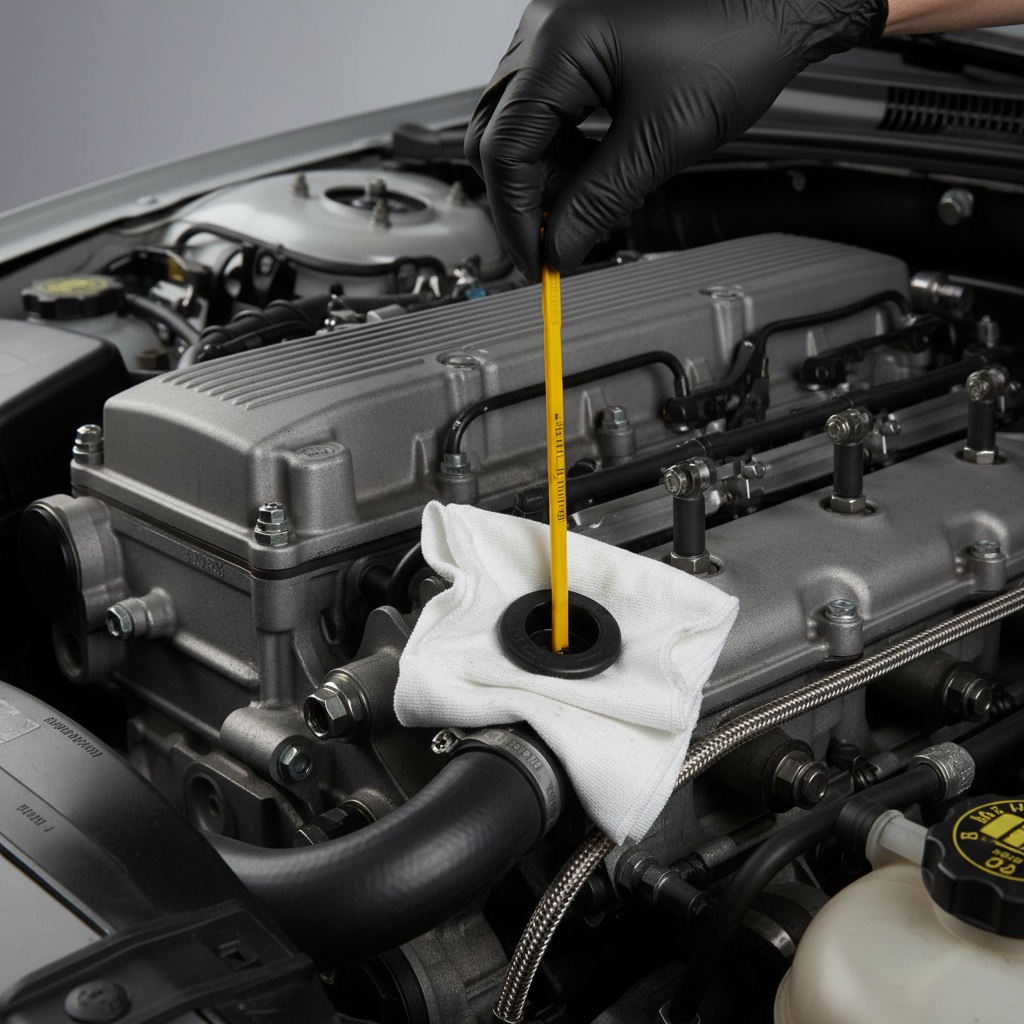
Here’s something every car owner should know: checking your oil with a dipstick isn’t just routine maintenance—it’s your engine’s lifeline. Think about it this way: your engine has hundreds of moving parts grinding against each other thousands of times per minute. Without proper lubrication, you’re looking at serious damage and repair bills that’ll make your wallet cry. We’re going to walk through two essential skills that’ll save you money and keep your car purring: how to properly check your oil level and how to spot the warning signs that scream “oil change time!”
How to Check Your Car’s Oil Level Using the Dipstick
Getting an accurate oil reading isn’t rocket science, but there are a few tricks that make all the difference. You’ll need some basic supplies—grab a clean rag or paper towels (trust me, things get messy), and maybe some gloves if you’re particular about clean hands. Here’s the key part most people mess up: park on level ground and let your engine cool down for about 5-10 minutes. Why? Because hot oil sloshes around like coffee in a moving car, giving you wildly inaccurate readings. These prep steps aren’t just suggestions—they’re what separate reliable results from guesswork. Want the complete breakdown? Our detailed step-by-step guide on how to check car oil level walks you through every single move, whether you’re a complete beginner or just need a refresher.
Now for the main event. Pop your hood and hunt for the dipstick—it usually has a bright yellow, orange, or red handle that practically screams “pull me!” Yank it out carefully, then wipe it spotless with your rag. This part’s crucial: you’re removing any old oil that’s clinging to the stick from your last check. Slide it all the way back in (don’t be shy, push it down fully), then pull it right back out. Now you can see where the oil actually sits compared to those little hash marks or crosshatched areas on the stick. But here’s what many people ignore—don’t just look at the level, examine the oil itself. If it’s black as tar, gritty like sandpaper, or has a milky appearance, your engine’s trying to tell you something important.
Key Aspects of Checking Oil with the Dipstick
Let me break down why each step matters—because understanding the ‘why’ makes the whole process stick:
- Preparation for Accurate Measurement: Level ground and a cooled engine aren’t optional—they’re physics. Oil needs time to drain back down to the oil pan, otherwise you’re measuring air bubbles and getting readings that are completely off base.
- Dipstick Handling: That clean-wipe-reinsert routine isn’t busy work. Old oil residue on the stick will throw off your reading faster than you can say “engine seized.” Do it right, and you’ll know exactly where you stand.
- Reading Oil Levels: Those marks on the dipstick aren’t decorative—they’re your engine’s way of saying “I’m happy” (full line) or “I’m thirsty” (low line). Stay in that sweet spot and your engine will thank you with years of reliable service.
- Oil Quality Inspection: This is where you become an engine detective. Good oil looks amber or black but smooth. Bad oil looks like chocolate milk, feels gritty, or smells burnt. Catch problems early, save yourself a fortune later.
Alright, so you know how to check your oil like a pro. But how do you know when it’s time to actually change the stuff? That’s where things get interesting.
Signs That Indicate Your Car Needs an Oil Change
Your car talks to you—you just need to know its language. And when it comes to oil changes, the signs are pretty hard to miss once you know what to listen for. Start with your ears: if your engine’s making noises it didn’t make before—knocking, ticking, or grinding sounds—that’s old oil failing to do its job. It’s like trying to slide down a playground slide covered in sandpaper instead of water. Then there’s the visual test we just covered: pull that dipstick and really look at what’s on there. Fresh oil has a nice amber glow; old oil looks like used motor oil (because that’s exactly what it is). Another red flag? You’re constantly adding oil between changes. That could mean leaks, but it often means your oil is breaking down faster than it should. And those dashboard lights? They’re not suggestions—they’re your car’s panic button. When oil pressure or engine warning lights come on, drop everything and pay attention. For the complete picture on oil changes, check out our guide on how to change car engine oil for detailed maintenance insights.
Here’s the bottom line: ignoring these warning signs is like ignoring chest pains—sure, it might be nothing, but do you really want to find out the hard way? Staying on top of oil changes based on your manufacturer’s schedule, plus keeping an eye out for these symptoms, is honestly one of the smartest investments you can make in your car.
Key Warning Signs for Oil Change
Watch for these red flags—they’re your early warning system for engine trouble:
- Engine Noise and Knocking: When your engine starts sounding like a diesel truck (and it’s not a diesel), that’s oil that’s lost its mojo. Those sounds mean metal grinding on metal—exactly what oil is supposed to prevent.
- Dirty or Dark Oil Appearance: Oil is like a sponge for dirt, debris, and combustion byproducts. When it’s saturated, it can’t clean anymore—it just pushes gunk around your engine like a dirty mop.
- Frequent Oil Top-Ups: Adding a quart every few weeks? Something’s not right. Either you’ve got a leak (check your driveway for spots) or your oil’s degrading way too fast. Both problems need professional eyes.
- Dashboard Warning Lights: Modern cars are pretty smart—those sensors are constantly monitoring oil pressure and engine health. When they light up, it’s not a drill. Pull over safely and figure out what’s wrong before you keep driving.

Want to keep your car running strong for years to come? Checking your oil with the dipstick is honestly one of the easiest things you can do—and it makes a huge difference. Think about it: your engine oil is like the lifeblood of your car, keeping all those moving parts from grinding against each other. When you pull that dipstick, you’re getting a quick health check on both how much oil you have and what condition it’s in. The basics are pretty straightforward: park on level ground, let the engine cool down, find that dipstick, and take a good look at what it’s telling you. And here’s something that can save you big money—learning to spot warning signs like oil that’s turned dark and gritty, or worse, milky-looking oil that shouldn’t be there.
Here’s the thing about skipping oil checks or misreading what you’re seeing: it can cost you dearly. We’re talking engine wear, overheating, or even complete engine failure (trust me, you don’t want to go there). But when you get comfortable with these simple checks? You’re ahead of the game. You’ll catch problems while they’re still small and fixable. Whether you’re making sure you’ve got enough oil or noticing that the texture just doesn’t look right, you’re taking control of your car’s health instead of waiting for disaster to strike.
Ready to take things up a notch? Now that you’ve got the dipstick down pat, why not learn how to change car engine oil yourself? It’s the natural next step and builds perfectly on what you already know. And if you’re just getting started with car care, check out these car maintenance tips for beginners—they’ll help you build a solid routine that keeps everything running smoothly. Don’t forget about your battery either; knowing how to check car battery health is another skill that’ll serve you well. And while you’re becoming your own mechanic, it doesn’t hurt to understand insurance for auto repair shops—because sometimes even the best DIY efforts need professional backup.
You’ve got the knowledge, you’ve got the resources, and now you’re ready to take real care of your car. Regular oil checks aren’t just smart—they’re your first line of defense against expensive repairs and roadside emergencies. There’s something pretty satisfying about popping the hood and knowing exactly what you’re looking at. Your car will run better, last longer, and you’ll have that confidence that comes from really understanding what’s going on under there. Keep exploring, keep learning, and enjoy the peace of mind that comes with being car-smart.
Frequently Asked Questions
-
How do I know if my oil level is too low?
- If the oil level on the dipstick is below the minimum mark, your oil level is too low and needs topping up to avoid engine damage.
-
Can I check my oil right after driving?
- It’s best to wait a few minutes after turning off the engine to allow the oil to settle for an accurate reading.
-
What does milky oil on the dipstick mean?
- Milky oil can indicate coolant mixing with oil, which may suggest a serious engine problem requiring professional inspection.